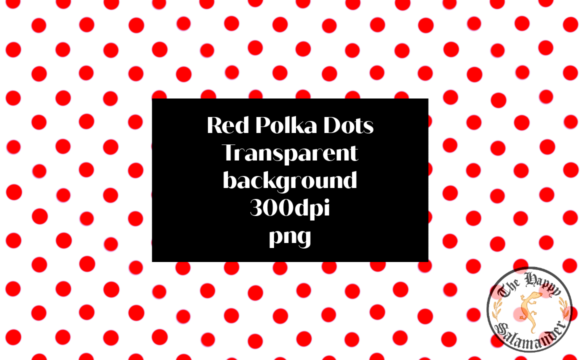
Red Polka Dots: Versatility, Precision, and Creative Utility in Digital Design
Red polka dots are more than a nostalgic motif—they’re a functional design asset with measurable utility across disciplines. When delivered as high-fidelity digital assets—specifically, red polka dots on a transparent background at 300 DPI in PNG format—they bridge aesthetic appeal with technical readiness. This combination unlocks precise layering, scalable reproduction, and seamless integration into professional workflows. Whether you’re preparing educational materials, prototyping packaging, developing brand assets, or engineering print-ready layouts, the specificity of this file type matters. Its transparency eliminates manual masking; its resolution ensures fidelity at both screen and physical scale; and its color consistency supports accessible contrast and brand alignment.
Why Transparency and Resolution Define Real-World Usability
A transparent background isn’t merely convenient—it’s a prerequisite for non-destructive editing and compositional control. Unlike JPEGs or flattened PNGs, a transparent PNG preserves alpha-channel integrity, allowing red polka dots to sit cleanly atop photographs, gradients, textures, or complex illustrations without white halos, edge artifacts, or clipping errors. This is especially critical in contexts where visual hierarchy must remain unambiguous: think infographics with layered data points, UI mockups with interactive dot-based navigation cues, or textile design software that simulates fabric draping over varied substrates.
The 300 DPI specification further anchors practical value. While web displays typically render at 72–96 DPI, print production—including brochures, signage, apparel labels, and exhibition graphics—requires higher sampling density to prevent pixelation or moiré patterns. A 300 DPI red polka dot PNG retains crisp circular definition even when scaled to 12 inches wide in a CMYK press layout. Importantly, this resolution doesn’t hinder digital use: modern image editors and CMS platforms handle downsampling intelligently, preserving sharpness at smaller sizes while avoiding unnecessary file bloat.
Professional Applications Across Domains
Different fields leverage red polka dots not as decoration alone, but as functional elements calibrated to audience cognition, material constraints, and regulatory expectations.
Educational Tools and Accessibility Design
In early childhood curricula, red polka dots serve as high-contrast visual anchors for pattern recognition, counting exercises, and spatial reasoning tasks. When embedded in SVG-based interactive lessons or exported to PDF workbooks, the transparent PNG version allows educators to overlay dots onto custom backgrounds—such as illustrated story scenes or tactile simulation grids—without obscuring underlying content. For learners with low vision, the consistent saturation and size uniformity of professionally rendered red polka dots support predictable visual scanning. Designers adhering to WCAG 2.1 guidelines verify contrast ratios (e.g., red #C00000 against light gray backgrounds) to ensure legibility across devices and lighting conditions.
Product Development and Packaging Prototyping
Consumer goods teams use red polka dots as placeholder motifs during rapid prototyping phases. A transparent 300 DPI PNG enables drag-and-drop placement onto 3D package mockups—whether a shampoo bottle, gift box, or snack pouch—allowing designers to assess rhythm, density, and visual weight before committing to print plates. Because the asset carries no background, it adapts instantly to metallic foils, matte laminates, or textured kraft paper simulations. One cosmetics startup, for example, tested three dot diameters (2 mm, 4 mm, and 6 mm) against shelf photography to determine optimal visibility at retail distance—using identical PNG files across all variants to isolate size as the sole variable.
Brand Identity Systems and Marketing Collateral
Red polka dots appear in logos, social media templates, and presentation decks—not as static icons, but as modular, repeatable elements. Their transparency permits dynamic tiling via CSS background-repeat or Figma auto-layout frames, ensuring consistent spacing across responsive banners. When incorporated into branded merchandise (e.g., tote bags, notebooks), the same PNG file can be imported into embroidery digitizing software or vinyl cutter workflows—provided the original contains vector-aligned edges and sufficient pixel density for stitch-fill accuracy. Designers report reduced revision cycles when stakeholders review mockups built from production-grade assets rather than low-res placeholders.
Technical Considerations Beyond the Download
Not all “red polka dots PNGs” deliver equal performance. Several technical nuances separate usable assets from those that introduce friction:
- Color accuracy: True red (#FF0000) may appear oversaturated on wide-gamut monitors or shift toward orange under certain ICC profiles. Professionally prepared files often embed sRGB IEC61966-2.1 profiles to stabilize rendering across macOS, Windows, and web browsers.
- Dot geometry: Perfectly circular dots require anti-aliased rendering at 300 DPI. Poorly generated assets exhibit jagged perimeters or inconsistent stroke weights, compromising scalability. Inspect zoomed previews at 400% to verify smooth curvature.
- File optimization: PNG compression should preserve lossless quality without inflating file size unnecessarily. Tools like ImageOptim or Squoosh reduce metadata overhead while retaining transparency—critical for CMS environments where upload limits apply.
- Scale-invariant naming: Files labeled “red-polka-dots-300dpi-transparent.png” signal immediate usability, whereas ambiguous names like “dots123.png” delay verification and increase cognitive load during team handoffs.
Workflow Integration: From Asset to Output
How red polka dots move through creative pipelines reveals their operational value. In Adobe Photoshop, users apply them as smart objects—preserving editability when transforming size or rotation. In Affinity Designer, they function as non-destructive symbols, enabling global updates across multi-page documents. In web development, developers reference them via srcset attributes to serve appropriately sized variants for retina displays and bandwidth-constrained devices.
For print production, preflight checks confirm embedded profiles, absence of extraneous layers, and correct DPI tagging. Many RIP (raster image processor) systems flag mismatched resolutions automatically—but only if the source file declares its intent clearly. A well-prepared red polka dot PNG passes these checks silently, accelerating time-to-print by eliminating manual resampling steps.
User-Specific Advantages
Understanding who benefits—and how—clarifies why this specific asset warrants attention beyond generic clipart libraries.
Researchers and Data Visualizers
In academic publishing, red polka dots act as categorical markers in scatter plots or heatmaps. Their transparency prevents occlusion of trend lines or confidence intervals. When exporting figures to TIFF for journal submission, maintaining the original PNG’s resolution ensures pixel-perfect reproduction in final proofs.
Hobbyists and Makers
From scrapbookers using Cricut Design Space to ceramic artists applying decals via waterslide transfers, hobbyists rely on clean, high-DPI assets to avoid fuzzy edges or registration drift. The transparent background eliminates tedious erasing or selection refinement—freeing mental bandwidth for composition rather than cleanup.
Business Owners and Marketers
Small business owners managing their own social media often lack design training but possess clear brand goals. A ready-to-use red polka dot PNG lets them add visual interest to Canva templates without risking copyright infringement or inconsistent styling. Its reusability across Instagram posts, email headers, and printed flyers reinforces visual continuity—a subtle yet measurable contributor to brand recall.
Evolving Expectations and Future-Ready Practices
As generative tools proliferate, demand grows not for generic outputs, but for context-aware, production-grade components. AI-generated polka dot patterns frequently lack transparency channels or embed incorrect DPI metadata—requiring manual correction before deployment. Human-curated assets like red polka dots on a transparent background at 300 DPI represent a counterbalance: intentional, verified, and interoperable.
Emerging formats like AVIF offer superior compression, but PNG remains the universal fallback for transparency support across legacy systems, email clients, and embedded displays. Choosing a robust PNG today ensures backward compatibility tomorrow—without sacrificing fidelity.
Implementation Without Overhead
Adopting red polka dots requires no specialized software or licensing. They integrate natively into free tools (GIMP, Photopea, Gravit Designer) and commercial suites alike. No plugins, scripts, or conversion steps are needed—just import, position, and export. This frictionless adoption lowers barriers for educators updating lesson plans, researchers illustrating methods, or startups building MVP landing pages.
What distinguishes this asset isn’t novelty—it’s reliability. In a landscape saturated with disposable visuals, red polka dots on a transparent background at 300 DPI represent a small, deliberate choice toward precision, consistency, and cross-functional utility. They don’t shout for attention; they serve quietly, accurately, and repeatedly—across screens, presses, classrooms, and studios.