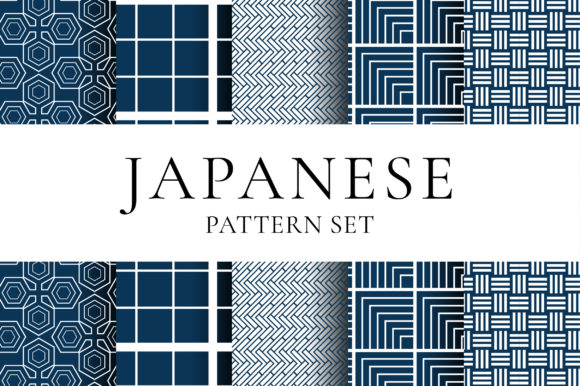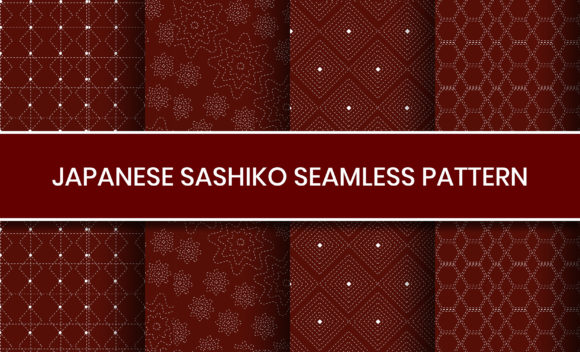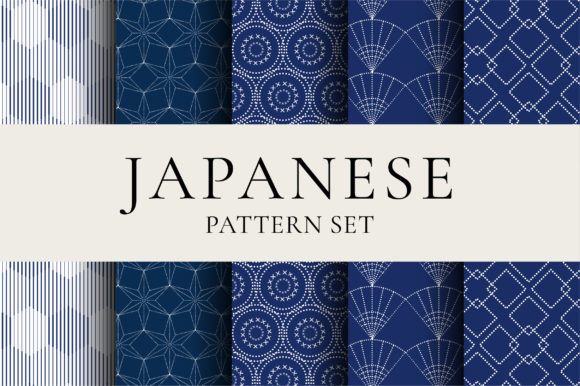
Traditional Japanese Seamless Pattern
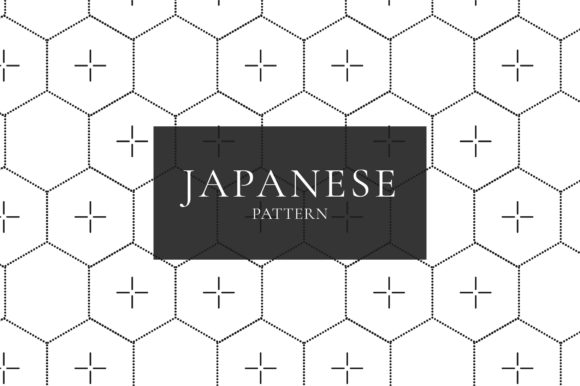
A Traditional Japanese Seamless Pattern refers to a digitally crafted, repeatable design rooted in historical Japanese aesthetics—such as seigaiha (wave motifs), asa-no-ha (hemp leaf), karakami (woodblock-printed paper), or stylized cherry blossoms and cranes—and engineered to tile infinitely without visible seams. Unlike standalone illustrations, these patterns are built with precise alignment at the edges, enabling smooth repetition across surfaces of any size. They are not merely decorative; they carry cultural resonance, compositional balance, and functional versatility—making them especially valuable for designers seeking both authenticity and adaptability.
People explore Traditional Japanese Seamless Pattern for varied reasons. Some need culturally grounded visuals for wedding stationery, tea ceremony invitations, or mindfulness-themed branding. Others seek texture and rhythm for textile design, packaging, or wall murals. Still others appreciate the discipline behind traditional motifs—repetition as meditation, asymmetry as harmony—and want that intentionality reflected in their projects. Importantly, interest often arises not from novelty alone, but from a desire for meaningfully structured visual language that supports rather than overwhelms a message or object.
When evaluating a set like the one offered by Abu Ashik Graphic Store—featuring 100 hand-drawn designs—the primary benefit lies in its origin and execution. Hand-drawing in Adobe Illustrator ensures vector scalability, clean paths, and intentional negative space—qualities essential for precision work like laser engraving, vinyl cutting, or fabric printing. High-resolution JPEGs provide immediate usability for print-on-demand services or digital presentations, while AI files allow full editing: recoloring, resizing, or integrating elements into larger compositions. The ZIP package consolidates all formats, streamlining access without requiring separate downloads or conversions.
However, practical tradeoffs exist. Because each pattern is hand-drawn—not algorithmically generated—it reflects individual stylistic choices. That means variation in line weight, motif density, or color palette across the collection. Users expecting uniformity across all 100 files may need to curate selectively. Likewise, while seamless tiling is technically achieved, some patterns may require minor manual adjustment depending on the application—for example, aligning wave rhythms precisely across large-format wallpaper or ensuring floral repeats read cohesively on curved garment panels. These are not flaws, but natural outcomes of artisanal creation.
Considerations extend beyond technical specs. Licensing terms matter: this collection appears intended for personal, small-business, and commercial use (e.g., printed cards, iron-on transfers, engraved gifts), but users should verify permitted use cases before deploying at scale—especially for products sold publicly. File organization also affects workflow efficiency. A well-structured ZIP—with clearly named folders for AI, JPG, and preview thumbnails—supports faster selection than a flat directory of 100 similarly named assets.
This collection is a strong fit when your goals emphasize craftsmanship, cultural nuance, and multi-purpose utility. For instance, if you’re designing a limited-run kimono-inspired tote bag line and need scalable, editable wave or bamboo motifs for screen printing and web banners, the vector fidelity and thematic cohesion deliver tangible value. Similarly, educators creating printable Japanese art history resources—or crafters using Cricut or Silhouette machines for handmade greeting cards—benefit from the combination of authenticity and file flexibility.
Conversely, alternatives may be preferable in certain situations. If your project demands strict adherence to historical accuracy—say, replicating Edo-period kosode textile patterns for academic publication—you may need reference archives or museum-licensed assets rather than contemporary interpretations. If speed and consistency outweigh stylistic uniqueness—such as generating background textures for dozens of social media posts—procedurally generated or AI-assisted seamless tools might offer faster iteration. And if your workflow relies heavily on raster-only software (e.g., Photoshop for photo compositing), the absence of layered PSD files could necessitate extra conversion steps.
Decision-making hinges on three questions: What is the end use? Physical product? Digital interface? Educational material? What level of control do you need over color, scale, and composition? Vector AI files support deep customization; JPEGs suit quick placement. How important is stylistic continuity across multiple projects? A hand-curated set of 100 offers thematic unity—but less variety than a broader, algorithmically expanded library.
For those evaluating options, it’s useful to test a sample pattern before committing. Extract one AI file and attempt a simple task: resize it to cover an A4 page, then export as PNG at 300 DPI. Does the tiling hold? Does the linework remain crisp? Try placing it over a photograph—does the motif enhance or compete? These small experiments reveal more than feature lists ever can.
The inclusion of multiple output formats—AI for editing, JPG for sharing, ZIP for portability—reflects thoughtful preparation for real-world constraints. You don’t need specialized archiving software: standard tools like Windows Explorer (via double-click extraction) or free utilities like 7-Zip suffice. No proprietary plugins or subscriptions are required to begin working—lowering the barrier for students, hobbyists, and independent designers alike.
Finally, keep expectations grounded. This is not a substitute for original illustration commissioning, nor does it replicate the tactile grain of traditional washi paper or woodblock ink bleed. It is a bridge: a digitally accessible, respectfully adapted expression of enduring visual principles. Its strength lies not in replacing tradition, but in extending its reach—allowing a wave motif drawn today to wrap around a mug, emboss a notebook, or animate a website background, all while retaining legibility and grace.
If your work values intention over automation, cultural resonance over generic ornament, and flexibility without compromise, a Traditional Japanese Seamless Pattern collection like this one merits close evaluation. It invites careful selection—not passive consumption—and rewards users who engage with its structure, history, and practical potential.